



To Avoid the Spread of Varicella (Chickenpox) : It’s Epidemic Season of Varicella ; Please Pay Attention to Individual Health Conditions
Hope all is well!
Please noted that the winter is the high-occurrence season for the varicella (chickenpox); please pay extra attention to individual health conditions and carry out self-management of health.
Varicella is an acute, systemic, highly contagious disease caused by the varicella-zoster virus (human herpesvirus type 3):
I. Symptoms: a mild prodrome of fever (37.5-39℃), tiredness, loss of appetite, headache and muscle or joint pain may occur 1 to 2 days before rash onset. After the rash starts, it would gradually develop into red papule, vesicular rash, impetigo, and finally all lesions would crust (scab). The rash usually appears first on the chest, back, and face, then spreads over the entire body. It progresses rapidly from systemic papule to vesicular lesions before crusting, which usually takes about two to four weeks to fully recover.
II. Highly contagious: the infection rate within one family is higher than 85%.
III. High occurrence seasons: the winters and early springs.
IV. Transmission: the virus can be spread from person to person by direct skin contact, inhalation of aerosols from vesicular fluid of skin lesions of acute varicella or zoster, and possibly through infected respiratory secretions that also may be aerosolized. The crusts are not contagious.
V. Incubation period: The average incubation period for varicella is 14 to 16 days after exposure to a varicella or a herpes zoster rash, with a range of 10 to 21 days.
VI. Infectious period: five days before the rash starts (usually one to two days before).Therefore, people who had been exposed to the VZV virus and who had not yet developed varicella have a chance to spread the virus to the others. Until all the lesions have crusted; the patient would have no contiguousness. People with varicella are most infectious before the rash onset.
VII. Sensitivity and resistance: sensitive to all who have not been infected, but the second occurrence of varicella is uncommon. After being infected with varicella, it can become a latent infection and recur as shingles in adulthood.
VIII. Prevention:
a. Vaccination: the varicella vaccine is a live attenuated vaccine. About 95% of people who received vaccination can develop antibodies that last for at least 7 years. Some people who have been vaccinated against varicella can still com down with the disease. However, the symptoms are usually milder. Those who are not immune can inject the varicella vaccine after being evaluated by a doctor at a medical institution.
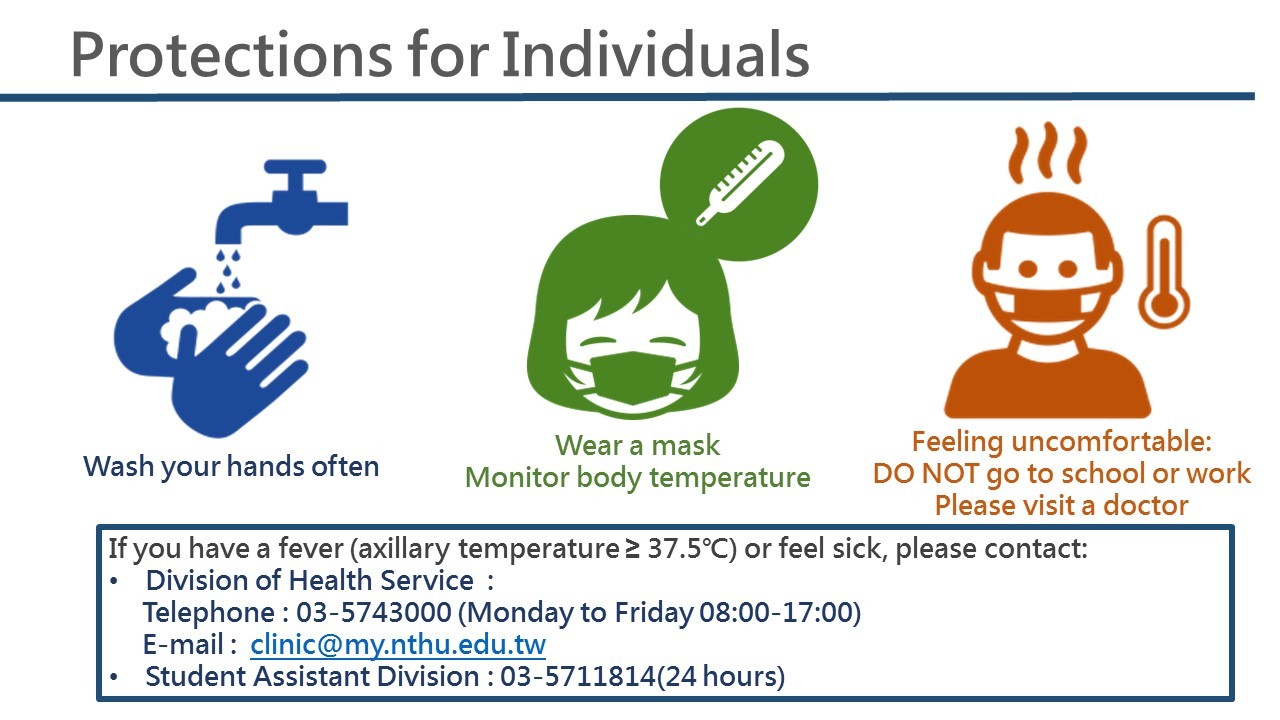
b. When suspect symptoms of infection, please wear long-sleeved clothes and a mask. Go to a hospital as soon as possible. Please refrain from going to class or work after being diagnosed to avoid infecting others.
c. Confirmed cases should follow the doctor's instructions to return home and carry out self-management of health. Until either all the lesions have crusted or with the doctor's evaluation can you return to school or work normally.
d. Contacts:
i. People in close contact with someone who is infected should maintain well personal and environmental hygiene, wash hands frequently and take self-health management. The timeline should be 21 days starting from the last day of having contact with the patient before returning to school or work. If symptoms of infection appear during the time period, please wear long-sleeved clothes and a mask and then go to a hospital as soon as possible.
ii. Post-exposure prevention: those who do not have antibodies to varicella can get the vaccine within 72 hours after exposure. Getting vaccine within 5 days of exposure can provide 70% protection to reduce severity of the disease. Getting vaccine after 5 days of exposure could still provide follow-up protection. Kindly note that the varicella vaccine is a live attenuated vaccine, get evaluation from a doctor before getting the vaccine to prevent contraindications to vaccination.
IX. For information on the prevention and treatment of varicella infectious disease, please visit the website of Department of Disease Control, Ministry of Health and Welfare https://0rz.tw/Rfq4B
X. Epidemic notification hotline of NTHU: Division of Health Service 03-5743000, campus extension 43000.
Good luck and best wishes to all of you, Division of Health Service 2020.11.03